
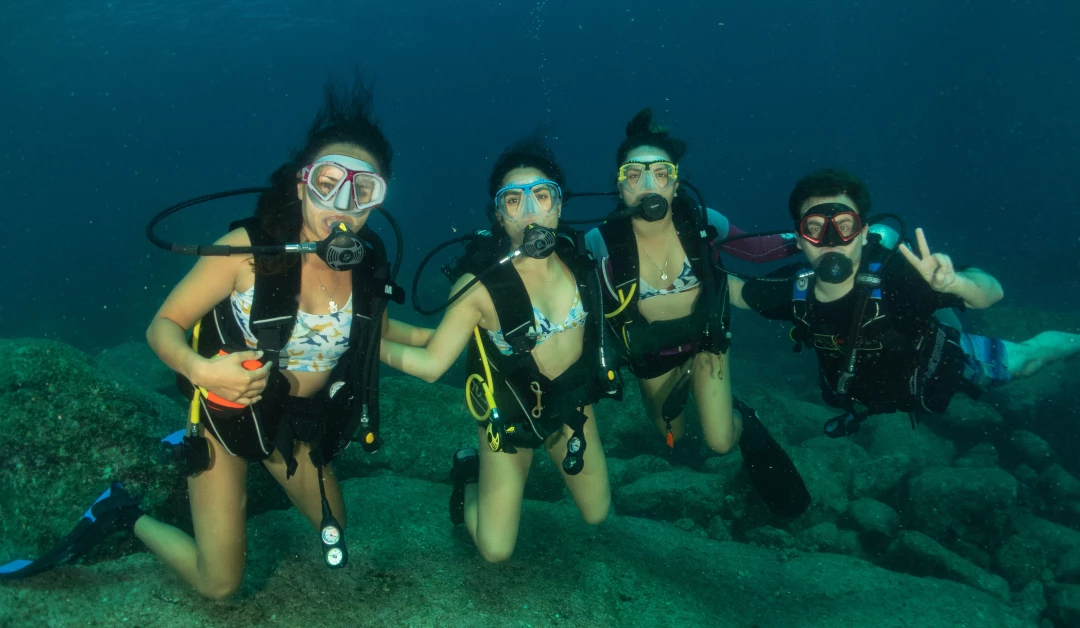
For those of us who dive frequently, this course is essential!
Get trained to respond to underwater and surface emergencies
At MTA we put safety first, being a trained diver is important to be able to read situations and know how to respond to them.
The PADI Rescue Diver course marks a pivotal transition in your scuba journey. You are no longer just asking, “Am I safe?”—you are asking, “Is my buddy safe?” This demanding, incredibly rewarding program shifts your mindset from personal dive execution to situational awareness, emergency prevention, and crisis leadership.
Oceanographic Guide and Rescue Training Conditions in La Paz
A competent Rescue Diver must anticipate environmental stressors before they trigger an emergency. The Sea of Cortez provides a dynamic training ground for environmental assessment.
Visibility, Temperature, and Hypothermia
Thermal variations are critical risk factors that a Rescue Diver must evaluate. Winter temperatures drop to 19-22°C (66-72°F), while summer waters reach 25-30°C (77-86°F). You will learn to recognize the early signs of thermal stress, preventing hypothermia and exhaustion in yourself and your team before panic sets in.
| Season | Period | Water Temp | Suggested Exposure Suit |
| Winter | December – February | 19–22 °C (66–72 °F) | Full 5mm wetsuit |
| Spring | March – May | 20–24 °C (68–75 °F) | 3mm to 5mm wetsuit |
| Summer | June – September | 25–30 °C (77–86 °F) | 3mm wetsuit or shorty |
| Autumn / Fall | October – November | 24–29 °C (75–84 °F) | 3mm wetsuit or rashguard |
Current Dynamics and Realistic Scenarios: Our rescue training leverages the diverse topography of La Paz to simulate authentic stress scenarios. We utilize protected waters like San Rafaelito for foundational skill introduction, then progress to dynamic environments with tidal currents, such as Swanne Reef or local wrecks. This varied exposure ensures your crisis management skills are tested under realistic oceanographic conditions.
Advanced Pedagogical Breakdown and Rescue Gear Proficiency
In a crisis, equipment is your primary lifesaving tool. You will learn to manipulate gear with automated precision under simulated stress.
Gear as a Lifesaving Apparatus: You will master the mechanics of establishing immediate positive buoyancy. This includes rapid inflation of the BCD and the tactical deployment (or ditching) of weight systems—both your own and the victim’s. We focus heavily on alternate air source management during out-of-gas emergencies and introduce you to specialized surface rescue equipment, prominently featuring the emergency oxygen administration kit and marine first aid systems.
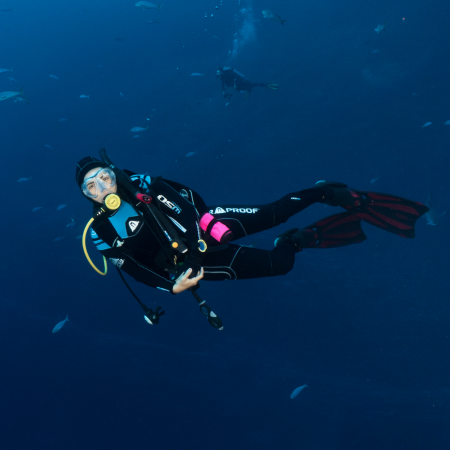
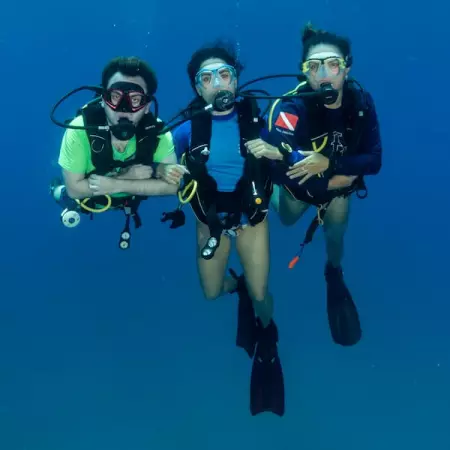
Certification Itinerary
This is an intensely practical, 2-day course built around the philosophy of “learning by doing under simulated stress.”
Theoretical Phase: Completion of PADI eLearning. Vital prerequisite: You must hold a valid CPR and First Aid certification (such as Emergency First Response – EFR) completed within the past 24 months.
Day 1: Confined Water & Problem Resolution: Focus on Exercises 1 through 5. You will master self-rescue techniques (cramp release, vertigo management), tired diver assists, panicked diver approaches, shore/boat rescues, and executing an underwater search for a missing diver using specialized navigation patterns.
Day 2: Unresponsive Diver & Final Scenarios: Focus on Exercises 6 through 10. You will learn to safely bring an unresponsive diver to the surface, administer rescue breaths in the water, remove equipment while towing, and execute physical extractions onto a boat, followed by oxygen administration. The course culminates in 2 Realistic Open Water Rescue Scenarios, where you must integrate all your skills to manage unscripted, simulated emergencies from start to finish.
Must have PADI Advanced Open Water certification and be at least 15 years old.
Rescue Diver: Training Sites Map (La Paz)
Interactive guide to confined water areas, shallow reefs, and open ocean rescue scenario sites.
El Bajo Seamounts
An open ocean seamount system with moderate to strong variable currents. Used to discuss advanced open ocean rescue planning for experienced divers handling pelagic environments.
El Salvatierra Wreck
A 1976 shipwreck functioning as a massive artificial reef. Expect mild to moderate currents for evaluating missing diver search patterns and unresponsive diver rescues.
Fang Ming Wreck
A 54-meter long sunken ship with mild currents. An excellent structure for practicing underwater emergency management and diver extraction techniques.
C-59 Wreck
An artificial reef shipwreck. Requires excellent situational awareness and buoyancy control to manage rescues during mild to moderate tidal currents.
Los Islotes
An emblematic site with a California sea lion colony. Rescuers must maintain situational awareness while navigating interactions with wildlife and moderate currents.
San Rafaelito Islet
A tranquil rocky islet protected from strong tides. The primary location for practicing tired diver assists, panicked diver management, and confined water skill development.
Swanne Reef
A shallow rocky reef located in the San Lorenzo Channel with variable currents. Great for conducting realistic rescue scenarios in a diverse marine environment.
Muelle Fiscal (Departure Point)
Official check-in at 09:00 AM on the La Paz waterfront malecón. Includes boarding our shaded panga boat and the daily emergency action plan briefing.
Included
Scuba equipment.
Lunch.
E-learning materials.
Not Included
Alcoholic drinks.
You must bring
Ecofriendly sunscreen.
Bathing suit.
Biodiversity Technical Sheets (Environmental Awareness)
A true Rescue Diver maintains strict environmental awareness, minimizing ecological impact even when operating under pressure.
Local Authority and the MTA Differentiator
Mexico Travel Adventure (MTA) delivers rescue training with unmatched rigor. Our PADI Instructors are not only marine biologists but experts in maritime crisis management within the Sea of Cortez.
Hyper-Reduced Groups for Maximum Rigor: Because of the physically and psychologically demanding nature of this course, we strictly cap our vessels at a maximum of 6 participants. This hyper-reduced ratio guarantees that every student experiences highly immersive, personalized drills. You receive direct instructor feedback and a rigorous, uncompromising evaluation of your response capabilities under stress.
Frequently Asked Questions
Do I need any special equipment?
A complete set of standard scuba equipment is sufficient; what is required is having the PADI Advanced Open Water Diver certification.
What certification do I need to take this course?
You need to have at least the PADI Advanced Open Water Diver certification (or an equivalent certification) and, obligatorily, CPR and First Aid training (such as the EFR course) valid within the last 24 months.
Is this course mandatory if I want to take further certifications?
The PADI Rescue Diver is a mandatory requirement and the essential foundation for those aspiring to a professional career, being the step immediately preceding the PADI Divemaster course.